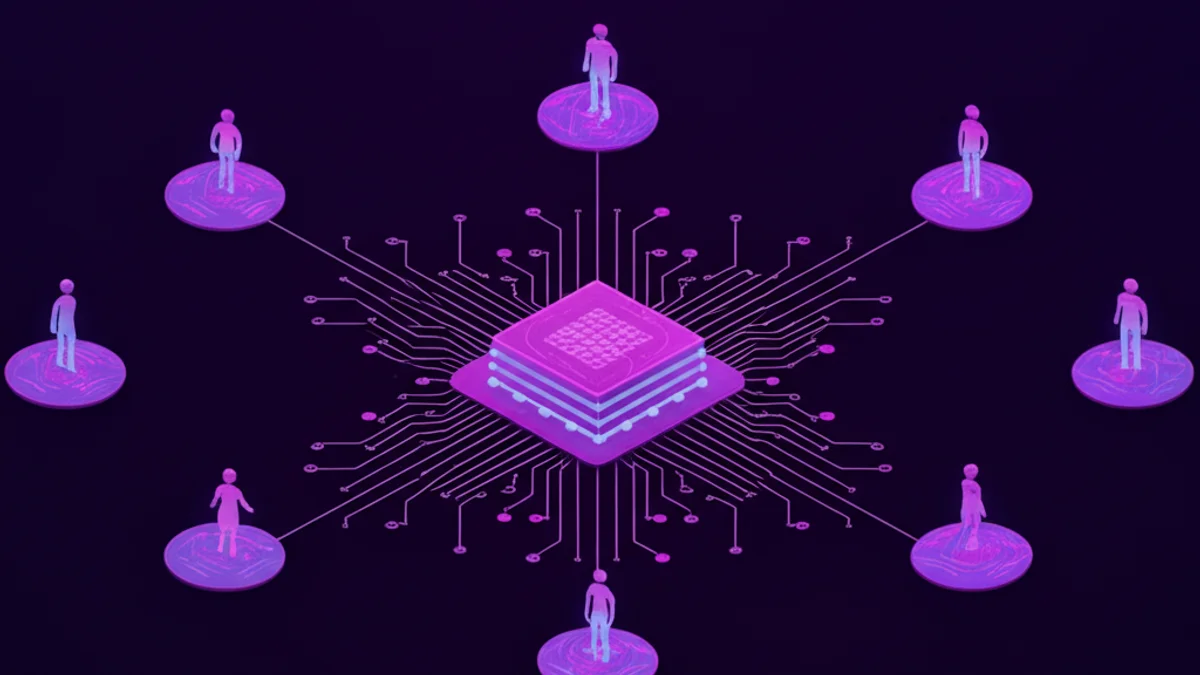
TL;DR — LLMs produce true statements, reason about domains they’ve never experienced, and behave as if they hold beliefs — but whether that constitutes genuine knowledge remains an open philosophical question. The practical upshot: treat LLM outputs as powerful pattern matching that warrants verification, not as testimony from a knowledgeable peer.
The Question
When GPT-4 correctly answers “What is the capital of France?”, does it actually know that Paris is the capital? Or is something fundamentally different happening—something that merely resembles knowledge without being the real thing?
This question matters more than it might seem. If large language models possess genuine knowledge, that changes how we should think about them and what obligations we might have toward them. If they don’t, we need a clear account of what they do possess that makes them so remarkably useful.
The Traditional Account of Knowledge
Philosophy has long analyzed knowledge as “justified true belief.” For someone to know something, three conditions must be met: the proposition must be true, the person must believe it, and they must have good reason for believing it.
Can LLMs satisfy these conditions?
Truth
When Claude states “Water is H₂O,” the proposition is true. LLMs frequently output true propositions—that’s part of why they’re useful. They also output false ones (what we call hallucinations), but so do humans. The truth condition isn’t the interesting one.
Belief
Here’s where things get philosophically interesting. Does an LLM believe anything? Belief, traditionally, is a mental state—an attitude toward a proposition. When you believe Paris is the capital of France, there’s something it’s like to hold that belief. It connects to your other beliefs, influences your expectations, shapes how you’d act in relevant situations.
Daniel Dennett suggested we can usefully attribute beliefs to any system whose behavior is best predicted by assuming it has beliefs and desires. Under this “intentional stance,” attributing beliefs to LLMs might be instrumentally useful, even if we’re uncertain whether the beliefs are “really there.”
Functionalists take this further: if a model behaves as if it believes P—using P in inference, expressing P when asked, adjusting other outputs based on P—then the model believes P. The behavior is the belief. There’s nothing more to belief than its functional role.
The skeptic responds: there’s no “there” there. The model has no unified self that holds beliefs. It’s a function from inputs to outputs. Attributing beliefs is a useful fiction, like saying your thermostat “wants” the room to be warm.
Justification
Even if we grant LLMs something like belief, are these beliefs justified?
Traditional justification involves chains of reasoning, evidence, and reliable cognitive processes. I believe Paris is France’s capital because I read it in reliable sources, can look it up on maps, and could verify it by visiting. My belief traces back through a chain of good evidence.
LLMs acquire their “beliefs” through training data. They believe what appears frequently and coherently in their corpus. Is this justified?
Interestingly, humans acquire most beliefs through testimony—we believe what others tell us. If I believe Paris is France’s capital because I read it in a book, is that fundamentally different from how an LLM acquires the same belief?
The key difference might be grounding. My belief connects to a web of experience. I can visit Paris, verify it on maps, integrate it with my broader geographic knowledge. The LLM’s “belief” floats free, grounded only in patterns of text.
Key Takeaway — Most human beliefs also come from testimony rather than direct experience. The critical difference is grounding: human beliefs connect to a web of experience, while LLM “beliefs” are grounded only in patterns of text.
The Symbol Grounding Problem
Stevan Harnad posed this challenge memorably: Imagine a Chinese-English dictionary that defines every Chinese word using other Chinese words. If you don’t know any Chinese to start with, the dictionary is useless—just symbols defined by symbols, with no connection to meaning.
For humans, symbols are grounded in sensorimotor experience. “Red” connects to actually seeing red. “Pain” connects to actually feeling pain. We break out of the symbolic circle through our bodies’ interactions with the world.
LLMs are trained only on text. They’ve never seen red. They’ve never felt pain. Their “understanding” comes entirely from patterns of word co-occurrence.
Does this mean they don’t understand? Or have they developed a different kind of understanding—one grounded in linguistic context rather than sensory experience?
Consider: blind humans understand “red” through verbal description and analogy. Their understanding differs from sighted people’s understanding, but it’s not nothing. Perhaps LLMs have something similar—genuine understanding that’s differently grounded.
Important — The symbol grounding problem is not unique to LLMs. Blind humans understand “red” through verbal description and analogy — a different kind of understanding, but not nothing. LLMs may have something similar: genuine understanding that’s differently grounded.
Knowledge Without Experience
LLMs engage in sophisticated reasoning about domains they’ve never experienced.
Claude can explain what it feels like to skydive, despite never having jumped from a plane or had a body that could fall. It can describe the taste of coffee, despite never tasting anything. It can reason about grief, despite never losing anyone.
How is this possible?
One hypothesis is simulation: LLMs build internal models of described situations. When asked about skydiving, the model constructs something like a mental simulation based on descriptions it’s encountered. The simulation isn’t experience, but it might be sufficient for certain kinds of reasoning.
Another hypothesis is structural knowledge: LLMs capture how concepts relate to each other. They know that “fear” relates to “danger” in specific ways, that “falling” involves “height” and “gravity,” that “coffee” has properties like “bitter” and “caffeinated.” This structural knowledge might substitute for experiential knowledge in many contexts.
A more skeptical hypothesis: LLMs don’t really know anything about these domains. They just produce outputs that look like knowledge because they’ve seen enough descriptions to mimic the patterns. It’s sophisticated pattern matching, not understanding.
Practical Implications
Whatever we conclude philosophically, these questions have practical consequences.
For Trust: If LLMs don’t “know” in the full sense, we shouldn’t trust their outputs the way we trust testimony from knowledgeable humans. An LLM’s output isn’t backed by genuine understanding or verification. It’s pattern matching on a massive scale—impressive and useful, but different in kind from human knowledge. This suggests appropriate skepticism and verification.
For Responsibility: If LLMs don’t know what they’re saying, they can’t be held responsible for saying it. Responsibility traces back to humans—the developers who built the system, the companies that deployed it, even the authors of the training data. The model itself is more like a tool than an agent.
For AI Development: If genuine knowledge requires grounding in experience, then future AI systems might need embodiment or world interaction—not just more text. Multimodal models that process images and video might be steps toward grounding. Robots that interact with physical environments might develop something closer to human knowledge.
Key Takeaway — If LLMs don’t “know” what they’re saying, responsibility for their outputs traces back to humans — the developers, the deploying companies, even the training data authors. The model itself is more tool than agent.
Beyond the Either/Or
We can approach this question in two ways.
The deflationary approach says: LLMs don’t have knowledge in the traditional philosophical sense, but they have something useful. Call it “information retrieval ability” or “pattern-based response generation.” Whatever we call it, it’s valuable, and we don’t need to settle the deep metaphysical questions to use it effectively.
The revisionary approach says: maybe LLMs force us to update our concept of knowledge. The question “Do LLMs know?” might be like asking “Do submarines swim?” Technically no—submarines don’t move like fish. But they achieve the same practical function of moving through water. Maybe LLMs achieve something like knowledge without being knowledge in the traditional sense.
Either way, engaging with these questions clarifies both what LLMs are and what we mean by knowledge. The debate about AI illuminates our own cognition—and we’re only beginning that conversation.
This is the first essay in our AI Truth and Justice research series—exploring the philosophical foundations of artificial intelligence: epistemology, ethics, alignment, and consciousness.
From Theory to Practice
Interested in how we apply these ideas? Our engineering series shows the practical implementation:
- Memory Systems — How we build persistent knowledge for AI agents
- CLI-First Architecture — Transparent, auditable agent integrations
- Context Optimization — Managing what agents know and when
Get Intelligence Reports
Want insights on how enterprises are navigating AI trust? Our Intelligence Reports deliver market analysis, implementation patterns, and strategic guidance—delivered to teams building with AI.